Opinions and Editorials Section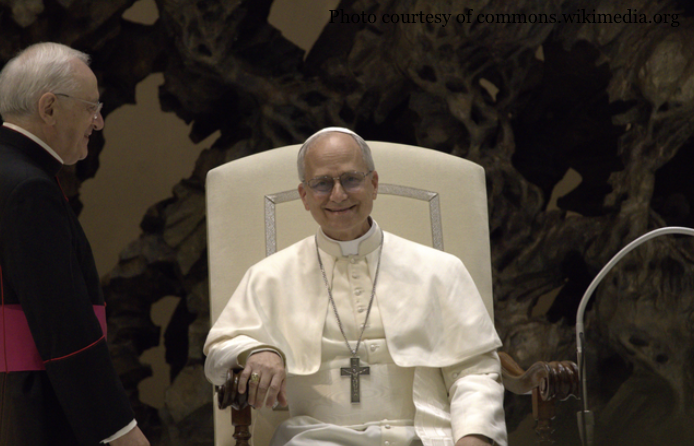
By Grace Campagna, Newswire Intern
On Oct. 9, Pope Leo XIV’s first apostolic exhortation, ”Dilexi Te,” was published. Amidst a polarized world and a church whose members sometimes lose sight of its priorities as related to human dignity – the document was right on time.
Elected on May 8, 2025, Leo serves as the head of the Roman Catholic church. He is known for his recognition of artificial intelligence as a challenge to human dignity, support of marginalized communities and addressing social justice issues, as seen in his address to the College of Cardinals on May 10.
An apostolic exhortation is a magisterial document written by the Pope of the Roman Catholic church, centered around a guiding theme. The exhortation is third in importance of the papal documents after apostolic constitutions and encyclicals. The document calls people, specifically people of the church, to a course of action rooted in its theme.
“Dilexi Te” (“I Have Loved You”) builds upon Pope Francis’s fourth encyclical “Dilexit Nos” (“He Loved Us”). The exhortation is addressed to all Christians on love for the poor and is an “invitation to contemplate Christ’s love, that we may be inspired to become attentive to the suffering and needs of others, and to share in the work of liberation that flows from his love,” according to the United States Conference of Catholic Bishops.
“Dilexi Te” emphasizes the catholic social teaching principle of option for the poor and vulnerable. “Love for the Lord, then, is one with love for the poor…In the poor he continues to speak to us,” Leo stated in paragraph five.
Leo establishes the idea of a church that is poor and for the poor, making it clear that one’s faith cannot be separated from caring for and identifying with the poor of the world. Such a statement reflects the Jesuit value of being people for and with others.

The pope’s apostolic exhortation reminds all the world, but especially those in the church, the importance of treating the homeless with the same dignity we treat everyone else.
The exhortation comes in the Jubilee Holy Year of 2025, themed “Pilgrims of Hope.” The theme was chosen to “promote peacebuilding,” according to Vatican News. The actions of the church and its members throughout the year reflect the theme of hope, both those who choose to embark on a pilgrimage and those who remain in their local communities. Pope Francis, the previous pontiff of the church, set the theme of the year and Leo XIV has carried it on.
“Dilexi Te” comes amidst various global crises that involve the poor, calling Christians to see the face of God in each of these individuals, whether it is an unhoused person that one passes on a street corner or a forcibly displaced person in South Sudan.
“On the wounded faces of the poor, we see the suffering of the innocent and, therefore, the suffering of Christ himself,” Leo stated in paragraph nine.
Some may argue that improvements for the cause of the poor have been made, and it is true that steps have been taken, but “Dilexi Te” is a reminder that “it remains insufficient,” as addressed in paragraph 10. Global wealth divides continue to grow, and people accumulate “wealth and social success at all costs, even at the expense of others,” paragraph 11 states. They are perpetuating the various forms of poverty, perhaps without even realizing they are doing so.
Mentioned is the growing attitude of indifference towards the poor of the world, a failure to recognize the humanity in the crisis and truly care for each individual. Leo speaks to a toleration “with indifference that millions of people die of hunger or survive in conditions unfit for human beings,”paragraph 11 states.
The definition of poverty is expanded, with poverty involving “multiple forms of economic and social impoverishment, reflecting the spread of inequality,” stated in paragraph 12.
“The fact that some dismiss or ridicule charitable works, as if they were an obsession on the part of a few and not the burning heart of the Church’s mission, convinces me of the need to go back and re-read the Gospel, lest we risk replacing it with the wisdom of this world,” Leo writes in paragraph 15.
Speaking directly to Christians who “have succumbed to attitudes shaped by secular ideologies or political and economic approaches,” Leo reminds us that care for and being one with the poor is not to be cast aside or seen as independent. Rather, it is central to the mission of the church and to the church itself.
In a culture of indifference and lack of concern for our fellow human beings, “Dilexi Te” is a necessary reminder to christians, that Christ is the face of the poor and we must act on this call that is essential to the identity of the church.