Sports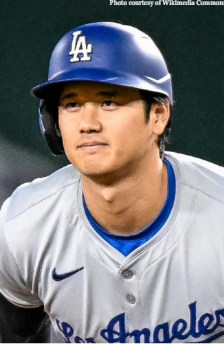
By Oliver Thomas, Staff Writer
After one of the greatest World Series baseball fans will see in their lives, the game of baseball is riding on an all-time high. The pitch clock and in-game rule changes have brought up fan engagement and made attendance skyrocket. Baseball has never had a bigger and more marketable group of superstars representing the game, not to mention the most popular and recognizable player the game has seen in decades, Shohei Ohtani. All this to say, the game of baseball has never been better.
Amidst this renaissance, a potential lost season in 2027 looms in the future, with the current Collective Bargaining Agreement (CBA) between the MLB and the Players Association expiring on Dec. 1, 2026.
The issue of baseball not having a salary cap has never been more prevalent than it is now after the Dodgers’ tear on baseball continued, winning their second straight World Series, making it their third title since 2020.
Much of this dominance stems from their $370 million payroll – the largest in all of baseball in 2025. For reference, the Dodgers’ payroll is estimated to be five times more than the lowest payroll in the league: the Miami Marlins, who only spent $70 million this past season.

The Dodgers have the largest payroll in the MLB.
This sparked a heated debate around the advantage that large-market teams like the Dodgers have over the rest of the league, giving them the ability to go out and buy a roster that includes three former MVPs as well as 17 former All-Stars.
“It is difficult for most of us owners to be able to do the kinds of things they’re doing,” Yankees owner Hal Steinbrenner told YES Network. To Steinbrenner and many other owners across the league, the only solution to even the playing field is by implementing an upper limit on what each team can spend each year.
On the surface, this seems to be the logical and simple solution; however, the process of getting there is a steep and rocky road. To the players, the salary cap is a threat. It puts a cap on their earning potential. “We are never going to agree to a cap,” MLB Players Association president Tony Clark said. “A salary cap, historically, has limited contract guarantees associated. (Literally,) it pits one player against another. It doesn’t reward excellence.”
With the CBA expiring next offseason, the salary cap will be the main and most controversial topic discussed between the players and owners. With negotiations likely starting soon, things look bleak when it comes to the chances of players and owners seeing eye to eye come next off-season.
If the owners and players do not come to an agreement, the owners have the ability to lock out the players, or the players have the ability to go on strike. Either of these outcomes is likely, with the best-case scenario being a delay in the season, something that happened as recent as 2022 after the owners imposed a lockout which lasted 99 days – from Dec. 2, 2021, to March 10, 2022 – leading to the season starting a week late.
With the Dodgers’ recent success since then and the owners likely to push even harder for a salary cap, it seems likely that the owners will vote in favor of implementing a salary cap. If this happens, expect players to go on strike, which has the possibility of the entire 2027 being cancelled. This exact scenario played out in 1995 as the entire season was canceled, over the same disagreements between the Players’ Association and owners over a potential salary cap.
If history repeats itself and there is another cancelled season like there was in 1995, the game of baseball is in for an incredibly dark era. It is up to the owners and players to find a way to see eye to eye, or else baseball and everyone involved in it is in major trouble.