Campus News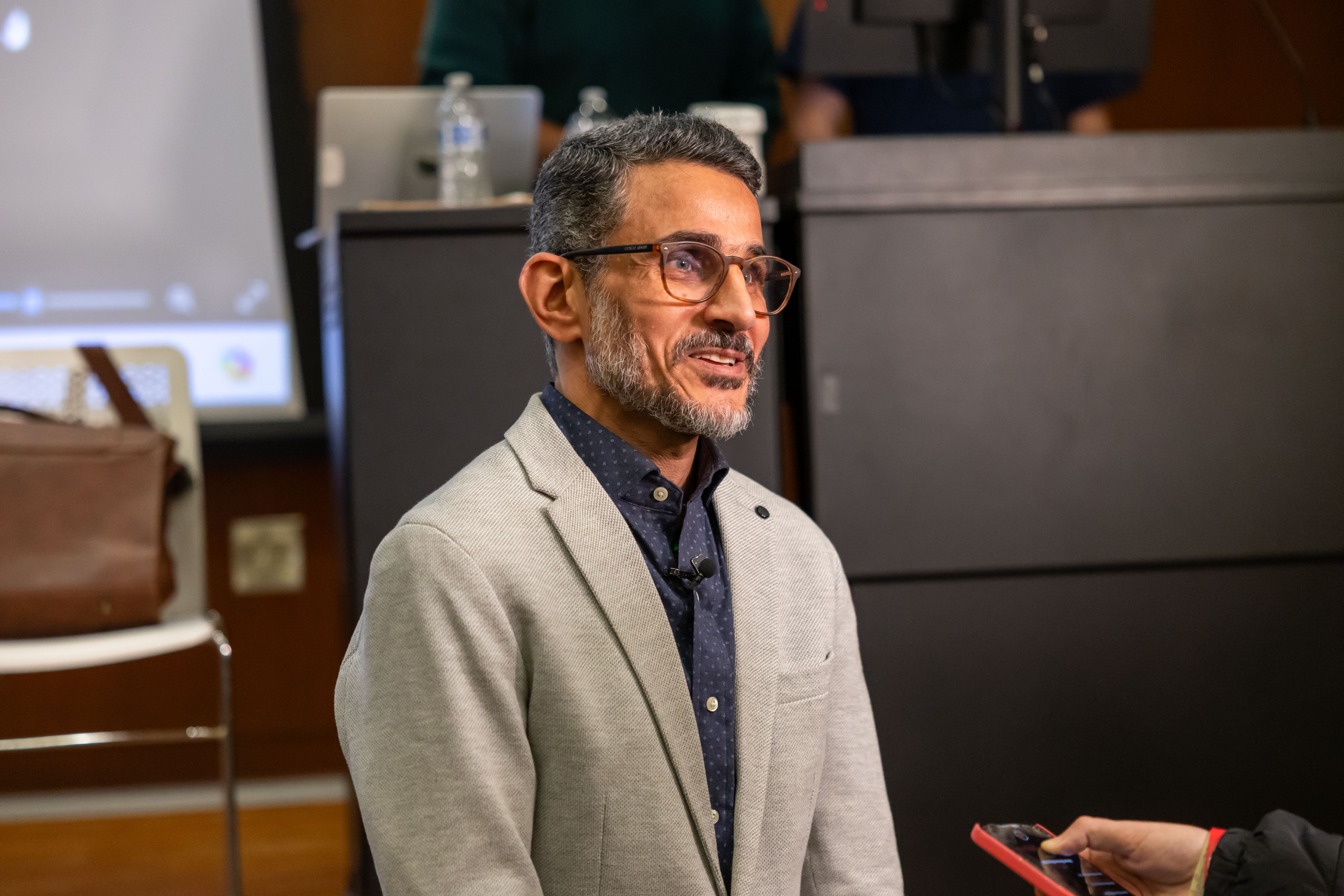
By Dominic DeGrinney, Staff Writer
On Monday, Take-It-On welcomed Imam Ayman Soliman to campus to talk about his experience being arrested by Immigration Customs and Enforcement (ICE) and his detainment in the Butler County Jail.
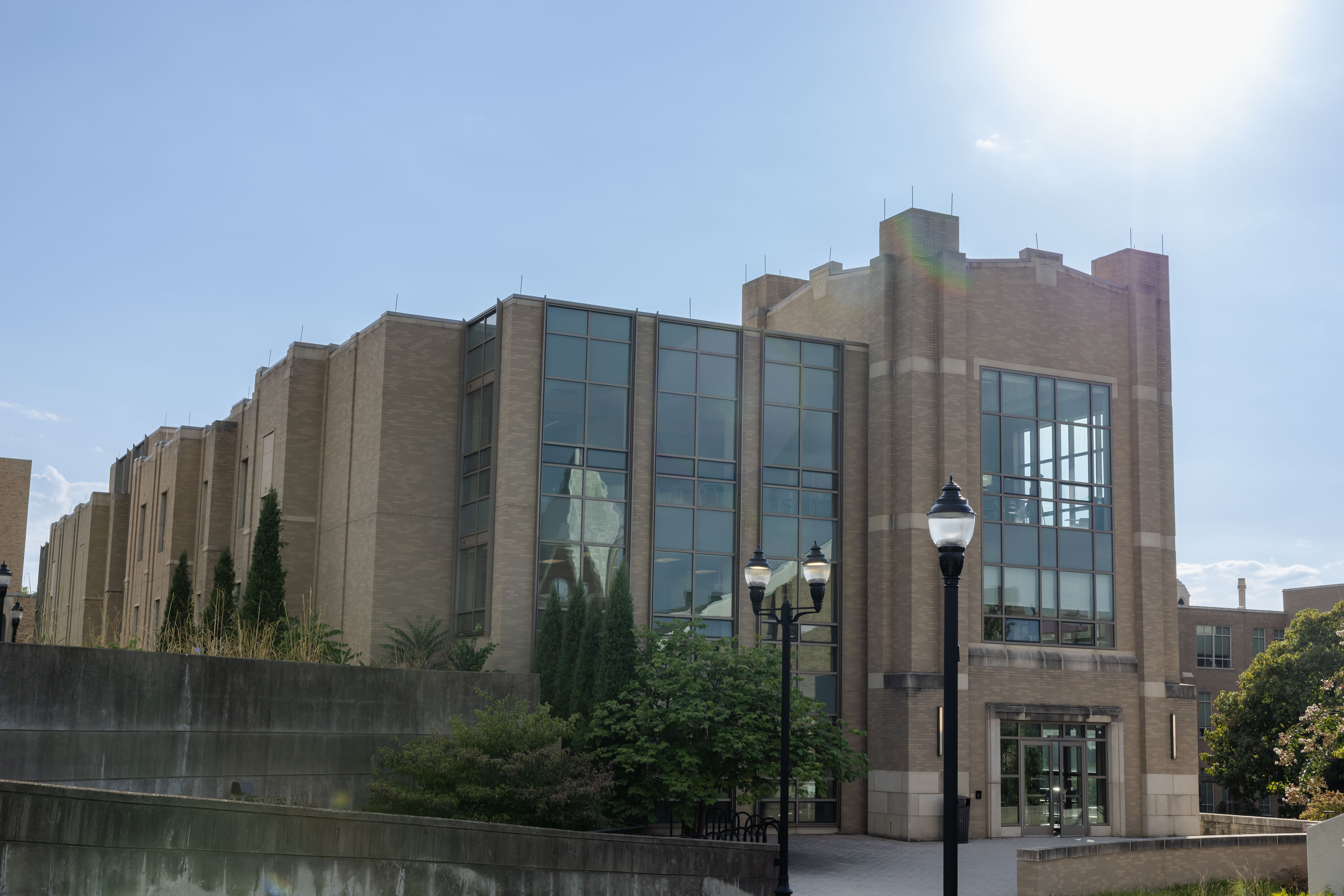
As guests settled into Kennedy Auditorium nearly every seat was filled with Xavier students, faculty, the Cincinnati community and local media outlets. Soliman shared each moment of his story, from the events leading up to him seeking asylum in the U.S. to his eventual release and homecoming from ICE detainment.
The battles he had to fight and hoops he had to jump through just to feel welcomed in the United States has ultimately left Soliman with a distrust in the nation that was supposed to protect him.
“I’m not sure if I will ever feel safe in the U.S. again. I cannot call it home, but I believe that Cincinnati is,” Soliman said. “Thanks to my beautiful community at Cincinnati… that community that went to speak out for me.”
Soliman attributes his freedom to the support he had from the Cincinnati community, many of whom were there in the audience Monday night. Soliman’s friends and supporters wrote letters, called Ohio politicians and raised the alarm until Soliman’s story garnered national attention, including a New York Times feature alongside two other former ICE detainees.

Muslim chaplain and former ICE detainee came to speak to Xavier.
Egyptian-born, Soliman lived and worked in Egypt as a city council candidate and then a journalist. From 2005 up until his departure from his home country in 2016 Soliman had to navigate the tumultuous politics in Egypt. His opposition to the military-backed regime of Egypt led to security forces terrorizing his residence.
Multiple attempts on his life later, Soliman fled to Chicago, Illinois where he studied film making. But this did not stop the raids on his residence in Egypt. The fifth time the security forces left Soliman the message, “we will get you wherever you go.”
After applying for asylum in the United States, many hour-long interview sessions and three years later, the country granted him protection. But this protection came with conditions that made Soliman’s life here in the United States more difficult. He was subject to random checks at airports and was put on the FBI watchlist which his lawyers took years to expunge.
Central to Soliman’s outlook on life is his steadfast faith. While in the U.S., Soliman sought out job opportunities to live out his Muslim religion and counsel others in their faith. In 2021 he moved to Cincinnati to be the first Muslim chaplain at Cincinnati Children’s Hospital.
It was in Cincinnati that he received a letter in June of 2025 notifying him that his asylum had been terminated by the Trump Administration and he had 30 days to leave the country. Soliman knew that deportation wasn’t a vacation back home to see his family: it was a death sentence.
“It was really impactful. It really opened my eyes to what’s happening… I just wasn’t as informed and it’s a scary situation what is happening right now… I’m glad people are speaking out about it right now,” senior Philosophy, Politics and the Public major Aidan Anich said.

With plans to sort out his revoked asylum status, Soliman attended a routine ICE check in. After confirming his life story at the check in, the ICE officers left the room and remorsefully came back with orders from “higher up” that Soliman was to be arrested and taken to Butler County Jail.
Located just 35 minutes north of Cincinnati, Butler County Jail was described by Soliman as the most traumatic place he has ever been in his life and where dehumanization is the norm.
“It was important to hear about what is going on so close in our community and Butler County Jail specifically. That wasn’t as much a part of the media (coverage) as his story was specifically. He really opened up people’s eyes to what is happening close to us,” senior political science major Abby Jaskowski said.
When he first entered the maximum security facility he was ushered into a room with temperatures around 30 degrees and kept there for 13 hours and had to exercise and keep moving around just to stay warm. Soliman was forced to strip out of his clothing in front of other inmates in violation of Muslim religious teaching.
Although a Muslim chaplain could visit on the weekend to hold prayer services in the multi purpose room, Soliman was prohibited from using it during the week to pray the five daily prayers known as the Salah. After a dispute over religious freedom with a corrections officer, who had three other complaints lodged against him for discriminating against Muslim inmates, Soliman was sent to solitary confinement.
“Why, why even do this? To break people so that they never speak up again,” Soliman said.
What kept Soliman going throughout his 73 days in Butler County Jail was his faith and his community. His friends and strangers protested, took action and wrote letters. Soliman received over 760 letters of support and encouragement while he was detained.
“The government tried to convince me that I don’t belong. ‘You don’t share our skin color, you don’t share our beliefs’ but Cincinnati made me feel like I belong,” Soliman said.
While in jail, Soliman had to resign from his position at Cincinnati Children’s Hospital after his asylum status was revoked. Now that he is out of detainment he uses his voice to speak up about the unjust experiences he faced and encourages the community to continue working together to create change.