Opinions and Editorials Section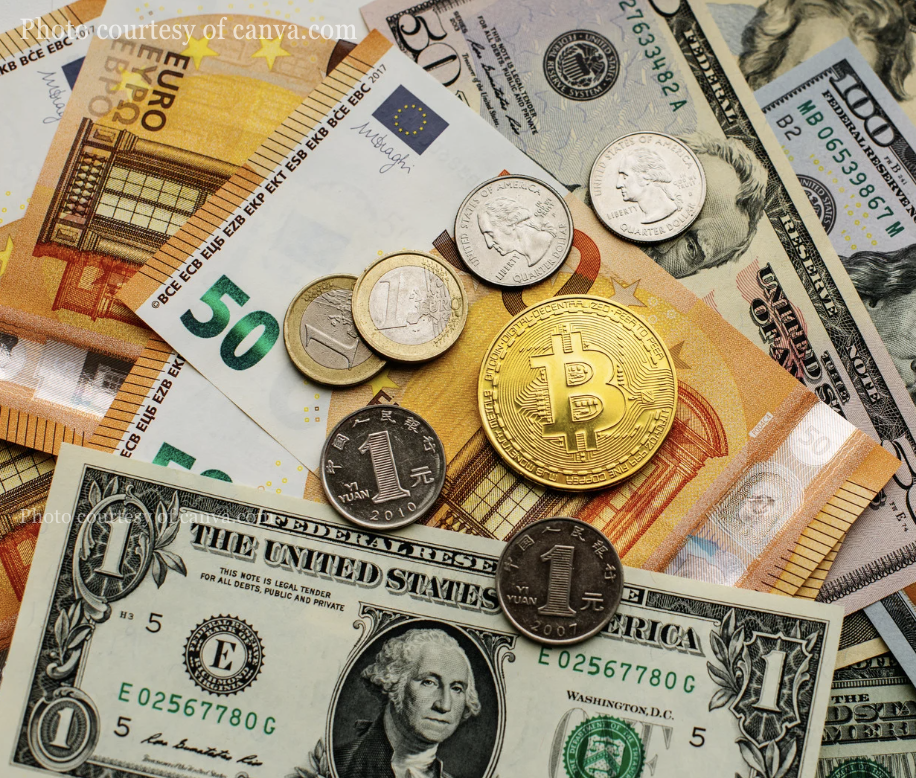
By Owen Gorsuch, Staff Writer
In the aftermath of the penny I have been thinking about other ways to reform the U.S. currency.
The sudden end to the penny’s production caused confusion for businesses that have had to adjust prices to account for the currency’s new status. This has sparked debate over monetary reform in this country.
While I believe there should be monetary reform in the United States, I agree that stopping penny production was not the right decision to make. Rather, there are several other aspects of our currency that should be adjusted in order to improve the way we deal with money.
Since the U.S. Mint is willing to make a decision as drastic as getting rid of the penny, I propose an overhaul of the U.S. dollar to bring it more in line with currencies of our allies like the Euro, British pound, Swiss franc and Canadian dollar.

Staff writer Owen Gorsuch gives ways to change the U.S currency to make it more seamless and efficient.
My first idea is increasing production of the 50 cent coin, also known as the half dollar coin. Believe it or not, the U.S. Mint already produces a 50 cent coin, albeit in low quantities, with John F. Kennedy on the heads side. If half dollar coins were circulated more, it would reduce the amount of change people receive.
For example, to make 60 cents in change, the half dollar coin reduces the amount of coins required from three to two. While this may seem trivial, this adds up to a lot of quarters that people would not have to carry around.
On the topic of streamlining transactions, I propose the increased circulation of the $2 bill for the same reason. In my opinion, paying for a $1 item with a $5 bill is one of the most awkward cash transactions in this country. A common transaction that should be simple instead results in four $1 bills in my wallet that I have to keep until the next time I pay in cash.
Don’t get me wrong, the $1 bill is a very versatile banknote that has its uses. However, receiving two $2 bills halves the amount of bills received in this transaction from four to two. Like the previous half dollar coin example, it may seem trivial, but the $2 could free up wallet space for many Americans.
My next idea is replacing Andrew Jackson with Franklin Delano Roosevelt (FDR) on the $20 bill. FDR’s policies leave a lasting legacy even today, which I believe makes candidate for the $20 bill.
My last idea is multi-colored banknotes. While most Americans are used to all banknotes being green, making different banknotes different colors would make it easier to tell them apart. Taking inspiration from other currencies and U.S. history, here are the colors I propose:
The $1 bill remains unchanged, owing to its iconic design. The $2 bill will be “bleu de France,” or French blue, representing Thomas Jefferson’s Louisiana Purchase. The $5 bill will be purple, representing Abraham Lincoln reuniting the Confederates (red) with the rest of the union (blue).
The $10 bill will be gold, representing the flag of the Caribbean island of Nevis, Alexander Hamilton’s birthplace. The $20 bill will be red, representing the coat of arms of FDR. The $50 bill will be orange, taking after the 50 euro note. Finally, due to its limited use, I would not change the $100 bill.