Local News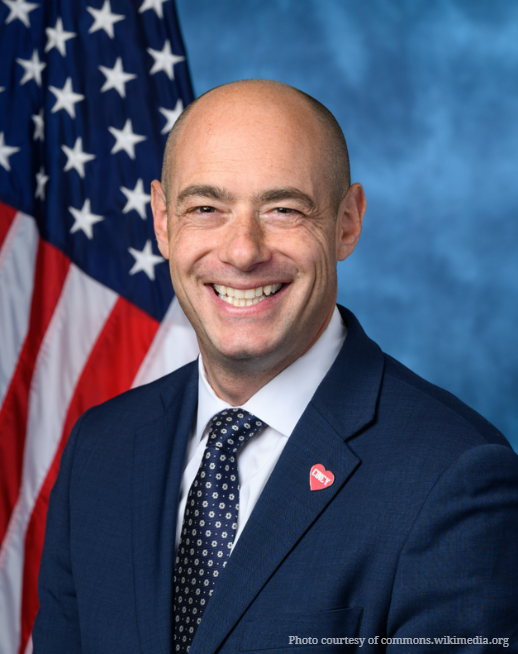
By Grady Andersen, Newswire Intern
Ohio’s Congressional Districts have undergone changes, following national trends of states gerrymandering their current districts in favor of more one-sided maps. Gerrymandering is the process of partisan redistricting, where congressional maps are redrawn to favor one political party over the other.
The Ohio Redistricting Commission unanimously passed a new map that would add two Republican seats, making the split 12 to three.
There were several maps introduced to the joint committee, one of which would favor Democrats with eight seats, leaving the GOP with seven. The map garnered hours of supportive testimony from members across the aisle, but was never put to a vote. However, several members outside of the commission felt it unfairly represented Ohio’s voting demographic, citing a Trump win by almost 11 points.
While Democrats on the commission largely felt this was insufficient, they felt that they were going to lose seats anyway. This led to them choosing to support this version, feeling that it was the best available option.

A diagram showcasing an example of redistricting with oddly shaped districts.
“This is not the congressional map that Ohioans deserve, however, I do believe with this map we have averted a disaster,” Democratic Senate Minority Leader Nickie Antonio told the Ohio Capital Journal.
Two of the largest districts affected are the first, represented by democrat Greg Landsman(D-Ohio) and thirteenth, led by democrat Emilia Sykes(D-Ohio). Greg Landsman’s district would see a complete flip, with Republicans having a complete turnaround compared to 2024, leading by 9%. While Sykes district would still have a democrat lead, it is razor thin, only having 52%.
While Landsman and Sykes are still at least looking at the bright side, Marcy Kaptur(D-Ohio), the representative for the ninth district, which contains Toledo, has a different opinion. While she was able to grab a razor thin edge to hold her incumbency, she is set to face a near 10% Republican lead. After the vote, she issued a statement condemning gerrymandering.
“While Democrats on the redistricting commission proposed a fair map at the outset of this process, in one-party rule Columbus, self-interested politicians cut side deals to pave their own future,” Kaptur said.
This map has fed into an ongoing gerrymandering war happening between states. Texas and California had started with trying a back and forth, but several other states have joined in, including Illinois, Georgia, Virginia and now Ohio. The Supreme Court has yet to take a look at the cases, leaving it up to smaller courts. While the chance of this map being challenged is quite high, it is likely it will remain in place come midterms, with six conservative justices in the Ohio Supreme Court.
While the new seats do not really hurt the Democrats right now, their path to regain the house majority has become a lot harder.