 Opinions and Editorials Section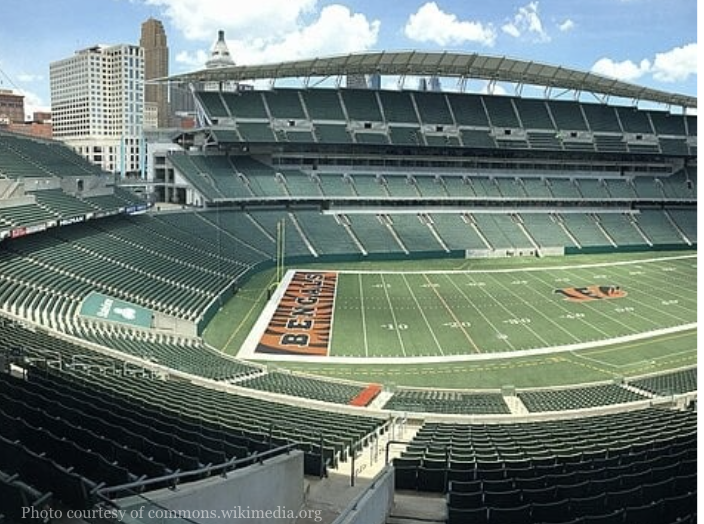
By Grady Andersen, Newswire Intern
San Antonio voters voted for nearly $300 million of taxpayer money to be allocated toward a new San Antonio Spurs Arena. The question once again reemerges of how much taxpayer dollars should be used to construct arenas and stadiums.
For the better part of the past 50 years, almost every major sporting venue built in the United States has had some form of public funding, either through subsidies or tax breaks. Sports teams no longer solely rely on public funds, but they are still used when building a stadium. The expectation is economic stimulation, which is not always met.
When Bengals ownership threatened to not renew their lease for Paycor stadium, citing a lack of upgrades and maintenance, Hamilton County was quick to request $350 million in the state’s budget dedicated specifically towards upgrading the stadium. They decried the states apparent focus on the Cleveland Browns’ Huntington Bank field and cited the economical stimulation that the Bengals provide.
Cincinnati is not the only city to have this experience. Buffalo is getting $850 million of public funding to build a new Bills stadium, $500 million for the Tennessee Titans and $300 million for the Atlanta Braves Truist Park. None of these were put to a vote, but are planned to only come from taxpayer’s pockets. The list goes on and on, as from 1970 to 2020, nearly 75% of funding for stadiums came from taxpayers’ pockets. Meanwhile, according to the Tax Foundation with prices increasing exponentially, fewer and fewer people are able to buy tickets.
These struggles not only apply to cities. With the 2028 summer olympics set to be hosted in Los Angeles, California and other locations around the United States, the federal government will be giving nearly $1 billion to help with development. This does not cover any other expenses, such as security, which has been promised not only for 2028 but for the 2034 Winter Olympics in Salt Lake City, Utah as well.

Newswire Intern Grady Andersen argues that the community’s tax dollars should not be spent on large stadiums throughout the United States.
The saving grace for this is the expected economic impact that will come from the Olympics. The 2024 Paris Olympics generated enough money for the committee to close the book with a surplus, and the Paris generated between almost seven and 11 billion euros, about eight to 13 billion U.S. dollars.
The argument supporting public funding for stadiums is if there is more investment, the economic growth will also increase. While the growth will eventually happen, it often will not return the original investment for a while.
Take the Banks district, which only became so developed because of Paycor Stadium and Great American Ball Park. The area garners on average nearly $2.5 billion of revenue every year. However, only $90 million is taxed out of that, just a tiny sliver of revenue.
So after four years, the money that was originally invested into only Paycor will be bought back into the public cash flow. That money is split between city, county and state taxes, so it could take a lot longer to fully refund where the original investment for upgrades came from.
It is time for the public to start demanding that public funds stop being used on such huge projects.


