Opinions and Editorials Section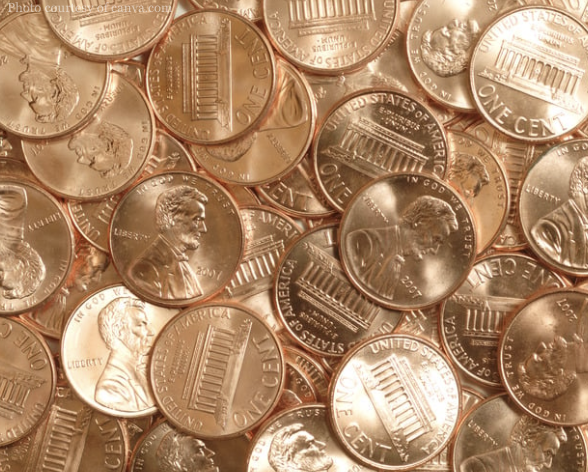
By Gavin Guffey, Newswire Intern
Back in late November, I was robbed of two cents.
Robbed is a strong word; however, it is true. A Starbucks location in the lobby of a Chicago Hilton is currently in possession of two pennies that are rightfully mine.
Let me explain – my sister and I went to Starbucks to purchase four drinks, with the total coming out to $26.48.
I paid with $30 in cash and received three one-dollar bills and two quarters in return. I may not be a math major, but I am fairly confident that comes out to $3.50 in change, not $3.52.
The reason for this is the federal government’s decision to discontinue minting the penny due to its high production costs, abandoning our American values and 232 years of tradition.
The U.S. Mint ended the production of the long-standing trademark coin on Nov. 12, 2025 according to USA Today. This is partly due to the demands of President Donald Trump, who has been advocating for the change since as early as February 2025.
The media and businesses have been quick to respond by labeling this as a “penny shortage.” They are citing the end of production as the reason for a lack of pennies being provided as change in financial transactions.
This so-called “shortage” leads to many complications and questions. In practice, it seems to just be an excuse for businesses and companies to short customers anywhere from one to four cents on each transaction when the consumer chooses to pay with cash.
It has been two months since the last penny was produced and customers are feeling the effects of this change. Companies have stated that they will begin to round up if the transaction ends in a three, four, eight or nine, but most have quietly resorted to rounding down regardless of the number, as evidenced by my Starbucks order ending in eight not being compensated.

Removing the penny from U.S. currency is only hurting Americans and helping big corporations.
While a lot of people will think nothing of this and just say “don’t be so cheap, it’s only a few cents,” I urge you to think of the long-term implications. Losing a few cents on every transaction where customers use cash will pile up to huge losses for consumers over time.
The penny, prior to being discontinued, cost 3.7 cents to produce according to AP News, meaning that the Mint lost money every time it created one. According to Truth Social, Trump’s main reason in his original call to end its printing.
For customers caring to save a few cents per transaction, your only option – without charging it directly to your card to pay later – is to do what everyone else clearly wants you not to do: carry pennies around. For example, if your total is $16.06, then you must pay $20.01 instead of $20.00 to get all your money back.
While the solution is not clear, it certainly is not to stop penny production altogether, and it definitely is not to stop utilizing them at all businesses.
This sets a dangerous precedent, as the next highest coin in worth – the nickel – costs 13.8 cents to create according to AP News, making it vulnerable to be the next victim of the Mint’s slashing.