Opinions and Editorials Section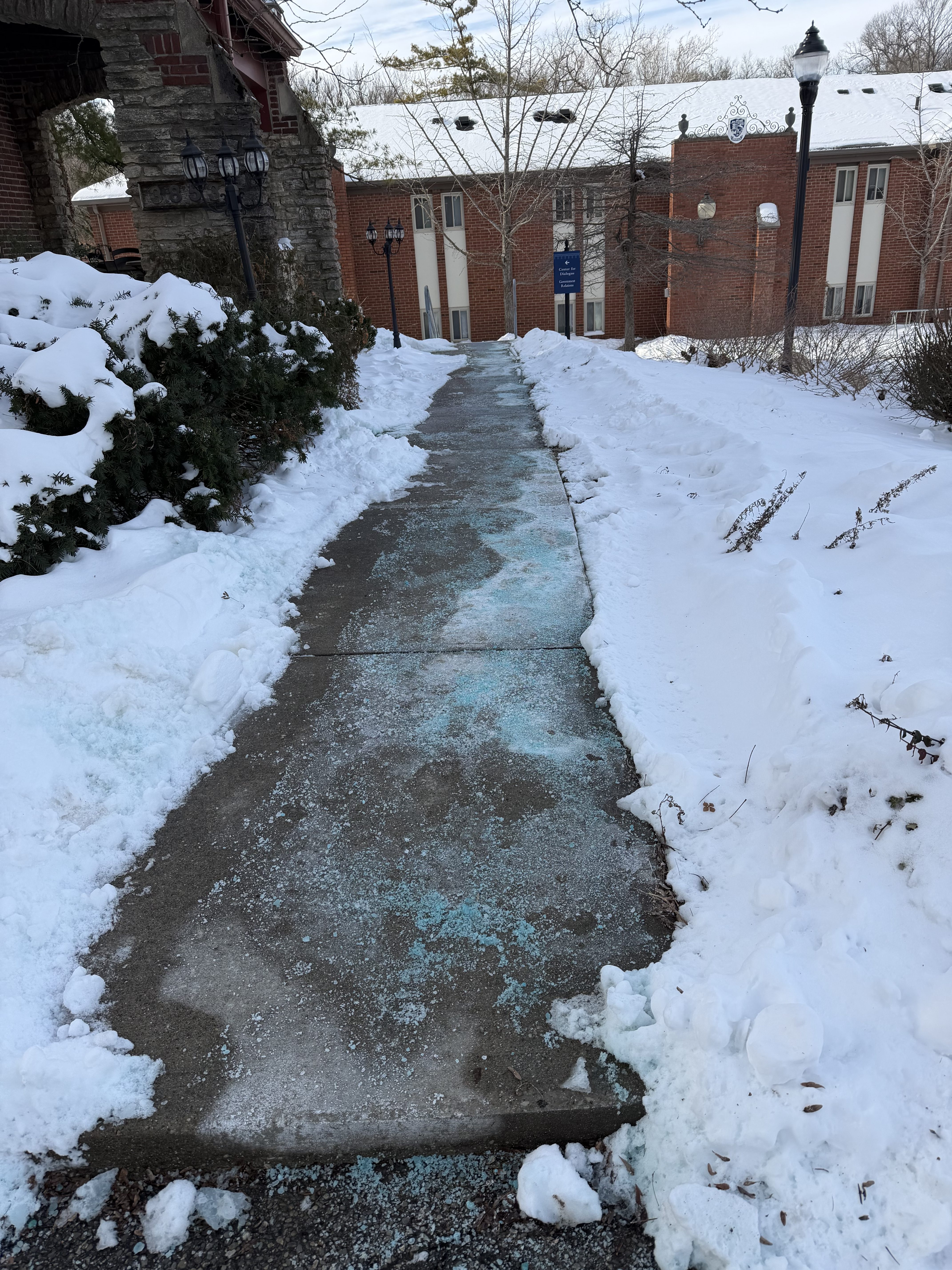
By Rory McNelley, Education and Enrichment Coordinator
The Cincinnati area and Xavier just experienced one of the worst snowstorms in a decade. This storm has affected campus in many ways including online days, snow piles in parking lots, freezing temperatures and salt on every sidewalk.

Education and Enrichment Coordinator Rory McNelley argues that too much salt has negative effects on the environment.
Salt is used before winter storms to prepare sidewalks, driveways and roads for incoming snow and ice. The chemicals in the salt, primarily sodium or calcium chloride, melt the ice at a much faster pace by creating a thin layer of brine on the pavement which prevents the ice from bonding to the pavement. The salt changes the freezing point of water and causes the ice to melt quicker, turning into water and flowing back to its source: bodies of water and soil.
Salt is very helpful in the wake of a storm like the one we have just seen, but the salt will be around long after the snow melts and the seasons change. Ecosystems that rely on runoff water will take decades to recover from just one instance of salt. If we salt every winter, ecosystems will never recover but instead face worse effects every year.
When snow melts and rain falls, water seeps into nearby soil. Water that does not soak into the ground flows over the land’s surface and moves to streams, rivers and eventually oceans. The salt goes with it and ends up in the soil and bodies of water we rely on. We are not the only ones who rely on this water; over 23,500 species interact with this water on a daily basis.
Roughly 6,000 species’ well-being is threatened by the chemicals humans contaminate runoff water with, including sidewalk salt. Since 1970, over 50% of freshwater and wetland species have declined in population due to worsening water quality. Additionally, salt turns soil toxic and prevents plants from absorbing water leading to reduced growth and more death of plants.
Xavier has a large campus with accessibility needs, so salt is necessary. But the types of salt and the amount we use can juristically change the impact.

According to Physical Plant’s Director of Plant Operations Jon Prabell, our campus uses three different types of salt purchased by the tonnage. Just a teaspoon of salt can contaminate five gallons of water meaning that one ton would contaminate more than one million gallons of water. One ton also causes roughly $1,500 in infrastructure damage.
Contaminating freshwater ecosystems, killing vegetation and polluting drinking water are only a few of the effects salt has on the environment. Chloride, a chemical in sidewalk salt, is a permanent pollutant that accumulates. The salinity of water kills insects, mussels, snails and fish, disrupting the food chain and reducing biodiversity.
Salt in the soil affects not only the plants, but those who eat them like various wildlife species and humans. The more salt we use, the more likely it is to end up in our food and water.
There are a few ways we can slow down the process of salt pollution and help our fellow species survive. Roughly 12 ounces of salt is sufficient for 20 feet of concrete. If we reduce our usage to only what is necessary, we can limit our effects. Additionally, we could substitute traditional salt for a safer but more expensive option, Calcium Magnesium Acetate which is less harmful to soil and wildlife.
I wanted to point out these effects not so you stop using salt all together, but so you are more aware that the steps you take to make your life easier can negatively affect so many others. We need to be more conscious on campus of how our choices will change the lives of other species. Let us not be careless with salt distribution, precise and measured salting can save lives.