Opinions and Editorials Section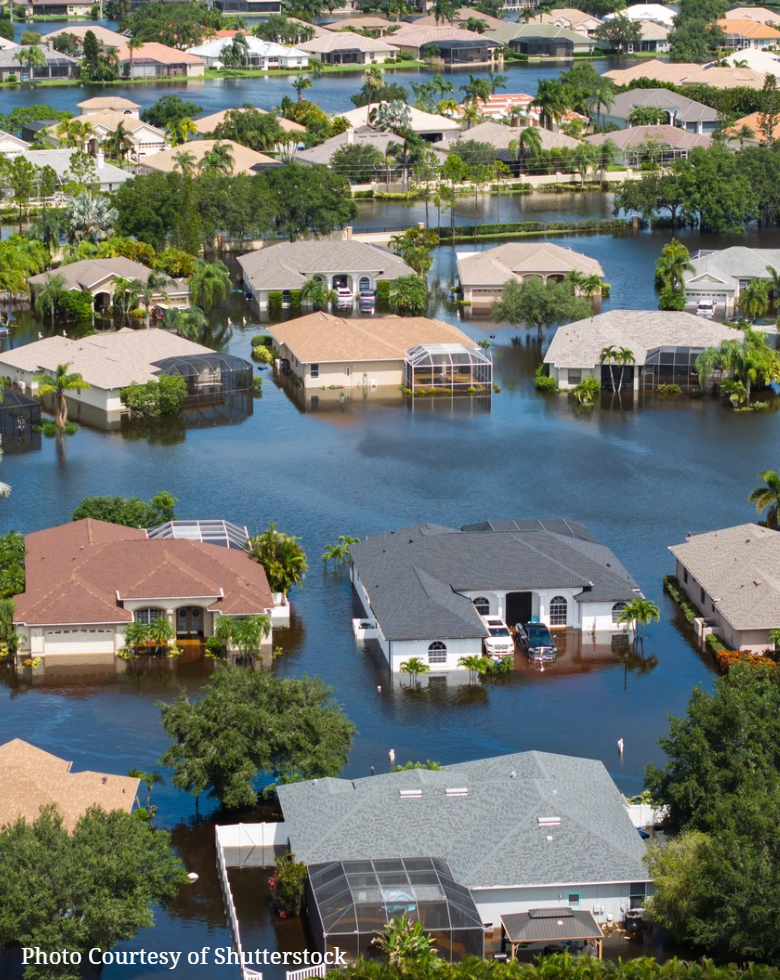
By Audrey Elwood, Chief Columnist of “Unhedged Women”
This summer has proven to be full of economic and environmental disasters throughout the country. Not even the richest country in the world is unscathed from the climate crisis, yet it is not the affluent that are bearing the majority of the burden. Instead, it is those communities with the least resources.
Northwestern Indiana has been hit with a massive derecho storm that has left people without power or clean water for over two weeks. The largest city in the region, Gary, Indiana has been hit particularly hard due to a lack of resources and poverty in the region. According to United Nations (UN), 80% of people in worldwide poverty are directly affected by climate disasters on a regular basis. According to Vox EU, from the Center for Economic Policy Research (CEPR), the extreme wealth inequality United States has been shown to be on par with that of pre-revolutionary France quantified by a high Gini coefficient. CEPR also finds that the top 1% of households hold 32% of wealth, while the bottom 50% hold 2.5%. Models of inequality such as the K-shaped economy have gained notoriety as the division between the wealthy and middle class has expanded since COVID-19, where the wealthiest Americans are seeing astronomical gains and everyone else is seeing a drop.
There is also an emissions inequality, with the average billionaire producing more emissions in 90 minutes than an average person will in their entire lifetime. They also have the privilege of their wealth to shield them from the ramifications of the problem they caused. It is a hypocrisy that often follows exorbitant wealth; the positives are concentrated at the top, and the only thing that trickles down is the negative effects.

Columnist Audrey Elwood argues that climate disasters disproportionately effect the marginalized
One historical example of wealth inequality and climate disasters is Hurricane Katrina, which rocked New Orleans in 2005. Due to extensive redlining, poor communities were concentrated on flood plans, and in a city that is below sea level, the consequences are dire. According to National Public Radio (NPR), the Ninth Ward of New Orleans (in 2005, 98.3% of residents were black, 40% of people were in poverty, and had one of the highest rates of black homeownership) was without doubt hit the hardest. Only 30% of residents returned to the area, and there was almost no support from the federal government due to miscommunication. The Louisiana state government had one of the worst managements of a disaster which caused an overhaul on disaster management and multiple lawsuits.
This is a well-documented problem, and while politicians claim to support the poorest among us, we can see the truth in their disaster management. The economic recovery has simply not happened in the majority of these areas. It is not just the major disasters that lead to these impacts, but we see worse economic impact in medium disasters, due to lack of federal funding. While we are living through increasing disasters, yet according to the Center for American Progress (CAP), the Trump Administration has continually defunded the already underfunded Federal Emergency Management Agency (FEMA) and National Weather Agency by $885 million. This not only defunds the aftermath relief, but accurate forecasting, research and the human capital that prevents large scale economic disaster.
With the midterms coming up, issues like abortion, immigration and inflation come to the forefront. When we reflect on our everyday lives, we assume a disconnect from our government. Our government is supposed to be in our corner, and with so much wealth in this country, we should extend a helping hand to our neighbors in strife. According to CAP, 80% of Republicans and 87% of Democrats believe the federal government should play a major role in disaster prevention and recovery.
When disasters happen, where inequalities and divisions are at their most visible, we must remember to love thy neighbor, and voice for strengthening resilience in our most vulnerable communities. Mother Nature strikes at any time, and having a government that cares is the way to rebuild stronger.