Local News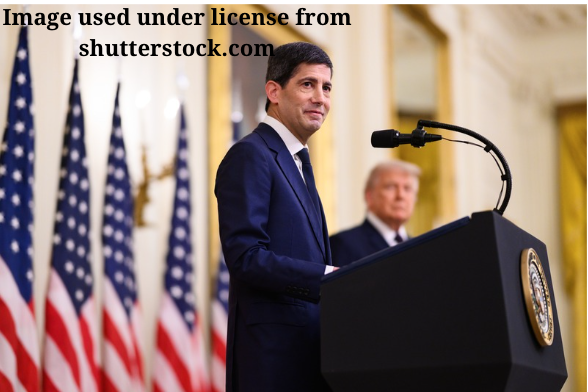
By Ryan Kramer, Newswire Intern
In a bid to combat inflation, the Federal Open Market Committee (FOMC) has raised the target of its federal funds rate from 3.50%-3.75% to 3.75%- 4.00% on Sept. 16. The FMOC, despite experiencing pressure to act by consumers, had not increased its target rate since July 2023.
The federal funds rate is the term used for the various interest rates that banks charge for each other when they borrow from each other. Traditionally, a hike in federal interest rates slows down the economy, as citizens take out fewer loans when the cost of borrowing from a bank increases. The FMOC uses this tactic of slowing down the economy to cut down on inflation.
The Federal Reserve has expressed a desire to keep interest rates at or lower than 2%. However, the headline inflation rate has risen to 3.4%, creating a larger problem. Weighing the dangers of rising prices and the costs of higher interest rates, the Fed assigned higher interest rates as the lesser of two evils.
Federal Reserve Chair Kevin Warsh led the unanimous decision, stating in a press conference on the day of the change that the Federal Reserve acted to stop the continued elevation of inflation.

“The committee’s unanimous vote shows our resolve to achieve price stability on a timelier basis. We aim to ensure that credit and financial conditions are consistent over time with our mandate, that relative price changes in some sectors of the economy do not broaden, that inflation compensation in market prices stays low, and that inflation expectations remain well-anchored,” Warsh said.
“I think this decision is a good example of the difficult job the Fed has because it has what we call a dual mandate: maintaining price stability while also promoting maximum employment. The problem is that these two goals can sometimes pull the Fed in different directions,” Xavier professor of economics Dr. Jae Hoon Choi said in recognition of the thought processes behind Warsh’s choice.
In contrast to Warsh, President Donald Trump remains optimistic about the state of the economy despite growing inflation. On the day of the target rate change, he called for the opposite of what Warsh, and the Federal Reserve have done, contending that the rates were already too high.
“The only problem we have is that interest rates are artificially high. Interest rates in the United States should be 1% or less because we are the best credit in the world by far,” President Trump said at a rally in North Carolina.
Positive attitudes about lower target rates are justifiable. “If [the Fed] raises rates too much, or keeps them high for too long, it could weaken the labor market. That balancing act between inflation and employment is really what makes this decision significant,” Dr. Choi said.
With Warsh pumping the brakes on the economy, the effects of the Fed will be recognized by entrepreneurs who have taken loans to start up their companies and by families who have taken loans to pay off their houses. College campuses like Xavier will see the effects as well – with a higher target for the federal funds rate, student loans can become more expensive to pay off.
“The effect can be more direct for private student loans with variable interest rates, but I would encourage students to think beyond student loans as well,” Dr. Choi said. “After graduation, they may be looking to finance a car, use a credit card, rent or eventually buy a home, or start a business. Higher interest rates can make many of those things more expensive.”
While the Federal Reserve’s actions may seem to be unrelated to the life of a Musketeer, unusual actions like raising the target rate by a fourth of a percent have consequences that can affect homeowners and borrowers for years to come. It is certainly not something to lose interest in.