Opinions and Editorials Section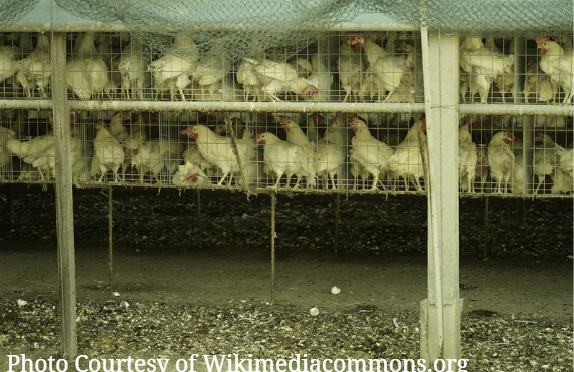
By Joe Reardon, Staff Writer
Kroger promised in 2016 to sell exclusively cage-free eggs by 2025. It reaffirmed that commitment two years later before abandoning the goal in 2022, citing a cage-free egg supply that outpaced customer demand.
Nearly four years after that reversal, the company still faces pressure from animal rights activists demanding that it follow through. Consumers should join them. Until Kroger establishes a concrete plan to eliminate eggs from caged hens, shoppers should take their business elsewhere.
The reason is simple: millions of hens should not have to endure unnecessary suffering because a corporation finds change inconvenient.
According to the U.S. Department of Agriculture(UDSA), approximately 160.7 million laying hens in the United States were housed in cages in April 2026, accounting for 52.3% of the country’s egg-laying flock. A typical caged hen has less area than a standard sheet of letter-sized paper.
Within these cramped enclosures, hens cannot comfortably spread their wings, walk freely or perform many natural behaviors. Hens naturally seek opportunities to nest, perch, scratch the ground and forage, but battery cages severely restrict these activities.
According to the World’s Poultry Science Journal, Cage confinement is also associated with compromised bone health and an increased risk of fractures. These are predictable consequences of a production system that prioritizes efficiency over welfare.
Kroger’s retreat is particularly difficult to justify because other major companies have demonstrated that change is possible. McDonald’s achieved its goal of sourcing 100% cage-free eggs for its U.S. restaurants in 2023, two years ahead of its original deadline. The transition required cooperation with suppliers, demonstrating that major retailers can help expand cage-free production rather than simply wait for the market to change.
Cost is a legitimate concern for consumers already struggling with grocery bills. Cage-free eggs can be more expensive, but the price difference is not always substantial or consistent.

Staff Writer Joe Reardon argues that companies like Kroger should keep their promises to reduce suffering, even when consumer convenience is at sake.
The USDA advertised-price data from June 2025 showed cage-free eggs averaging $3.07 per dozen, compared with $2.60 for conventional eggs, a difference of 47 cents per dozen, or about four cents per egg.
Prices vary by location and date, but the figures challenge the assumption that cage-free eggs must always be prohibitively expensive.
Consumers should not have to solve this problem through their individual purchasing decisions alone. Kroger has the purchasing power to work with suppliers, expand availability and make cage-free eggs more accessible.
Its size gives it an opportunity to lead, and consumer pressure can help hold the company accountable for doing so.
Kroger’s ability to influence its suppliers also raises a broader question about the responsibility companies have for the conditions behind the products they sell.
All animals experience pain and distress, experiences that are easy to disregard when they occur out of sight and produce something consumers want to buy. The fact that one practice is profitable or commonplace does not make its consequences acceptable.
These same ethical concerns motivate boycotts of fast-fashion companies that rely on exploitative labor practices. Consumers who question whether inexpensive clothing is worth the human suffering behind its production are applying a similar principle: that affordability does not excuse exploitation.
The circumstances differ, but the underlying principle is the same: that affordability does not excuse harmful practices because they make the animal products we want cheaper or more convenient.
Just as consumers can demand better treatment for workers, they demand better the treatment of animals whose suffering makes certain products possible. What we buy reflects not only what we value as consumers, but also what kinds of suffering we are willing to accept.
Cage-free production is not cruelty-free, and ending battery-cage confinement will not end every form of animal exploitation. Nevertheless, reducing the suffering caused by cages is a meaningful improvement, even if it does not resolve the broader ethical problem. If animals suffer as a result of the animal product industry, why should that suffering be justified because convenience is at stake?
Kroger made a promise and abandoned it. Shoppers should not reward that decision with their money. Until the company publishes a transparent, time-bound plan to eliminate eggs from caged hens, consumers should take their business elsewhere.