Opinions and Editorials Section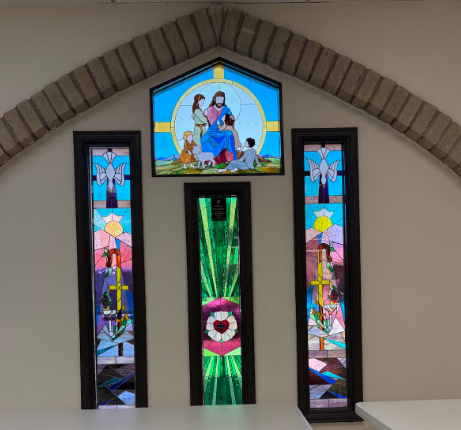
By Ben Dickison, Back Page Editor
Trusting is a feeling, but it is made real by the choice to act like a member of the human family and seeking to see the goodness in other people. When we find goodness in other people, we drift from the idea of the “other” and see ourselves as in unison with others.
Over Spring Break, I had the chance to visit El Paso, Texas for just $200 as part of Xavier’s Alternative Breaks program.
El Paso, formerly a part of Mexico, provides a unique and beautiful paradigm of the cultural differences between the United States and our neighbors to the south.
In the U.S., especially in my home state of Kentucky, we are told to prioritize “God, family and country” – with the last two being interchangeable depending on one’s life experience – above all else.
In Mexico, those big ideas do not differ much on paper; as a country that identifies as 77% Catholic (and 91.3% Christian) according to its 2020 Census, many of the Mexican folks we met live their faith by attending church on Sunday. However, what my group saw during and after the bilingual Church service we attended at Cristo Rey Lutheran differed greatly from anything I have seen in 20 years of attending Catholic Mass weekly in the states.

At the Mass Ben Dickison visited in El Paso, he was struck by the community’s willingness to connect with one another and treat everyone like family.
First and foremost, during Catholic and Lutheran services alike, attendees engage in a sign of peace before receiving Communion. In American Catholicism, it is common practice to shake hands or even hug those in one’s immediate proxy, but there is usually no expectation to leave one’s seat and seek others out.
At the service in El Paso, everyone stood up and left their seat for the sign of peace. We did not sit down until each person had greeted every other person. Regardless of our skin color, spoken language, height, weight, socioeconomic class or faith background, we were family. We showed that to each other by taking time out of our day, leaving less time to do tasks on our “checklists” or prepare for work in the morning. The currency was our time and our presence.
Nothing was done with haste because nothing is more important than the chance to meet the good in each other. In El Paso, I never heard a person who identified as Mexican American ask something like “How much time is left?” or “When is this going to be over?” Those questions have been prevalent throughout my childhood in the American Midwest and South, even at church.
The Catholic “Novus Ordo” instructions for Mass instruct clearly that nothing should be done with haste because there is no more important activity than encountering Christ. And yet, once Mass is over, everyone in my parish exits right away, gets in their own cars and drives home as fast as they can.
This cultural difference was once again reflected by the potluck we shared after the service. There was no scheduled end time for the gathering, only a start time of “1-ish” on the services to allow for intentional preparation so that folks could be in a healthy headspace for the most important things they will do all week. We all gave of what we had, regardless of our ability to live in financial comfort afterwards. Then, we leaned into the discomfort we had about our language barrier. There was no shame in using translation, because the reward of meeting the good in one another was worth enduring the awkward pause it takes to type a sentence into Google Translate.
The best thing about these interactions is that, with effort and willingness to be uncomfortable, they make the goodness in people more visible. Seeing the goodness in other people as sacred creations allows for mutual aid through the ups and downs of life.
In the people I met, there is a real longing for interdependence and oneness, and a real belief that God created us to rely on each other. Psychologists recognize this phenomenon as “familismo,” which Psychology Today defines as “a central Latin cultural value that involves dedication, commitment and loyalty to family. Regularly spending time with one’s immediate and extended family is part of familismo.”
As members of faith communities, workplaces, teams, choirs, bands, scouting troops, support groups and other social institutions, we should have faith in the concepts of familismo. We are more than beings called to use our time to contribute to the economy. Rather, we are sacred beings who should recognize that there is nothing more important than savoring the beauty in the unique creations that we are. The risk may be less time to finish that spreadsheet, executive summary or study guide, but we are called to have faith in our communities and learn to live like everyone we meet is family.