Arts and Entertainment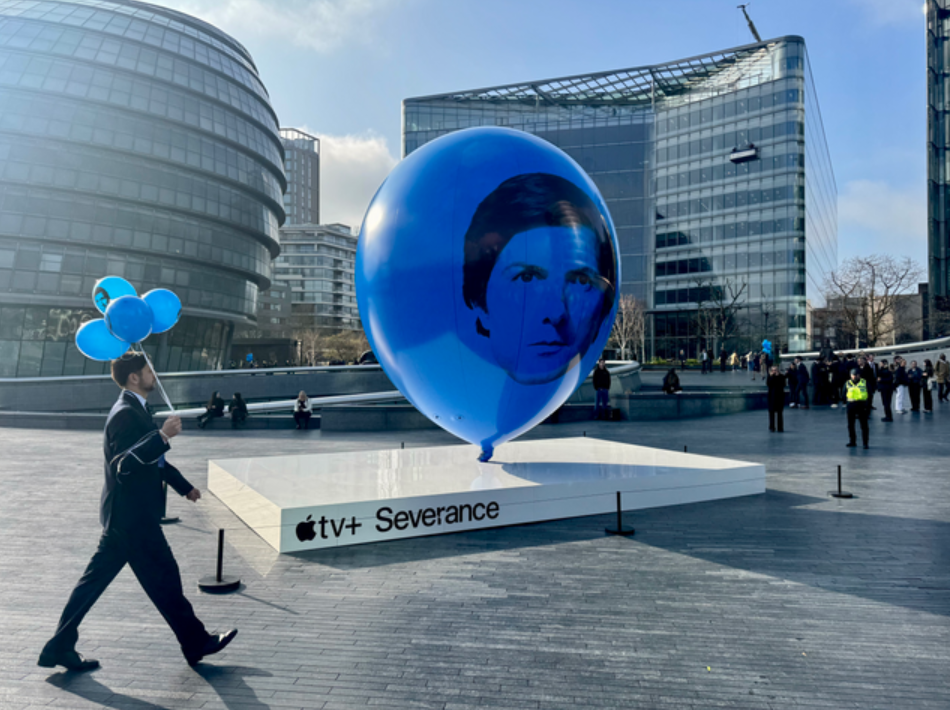
By Hannah Wolke, Digital Communications Manager
Every once in a while, a show comes along that completely redefines what you think television can do. “Severance” is that show.
“Severance” is built around a sci-fi concept that feels just close enough to reality to be unsettling once you think about it. To be severed in this world means to undergo a procedure that allows a person to “sever” their work self from their personal self. Picture this: you are walking into the office, and the next thing you know, you are walking out, eight hours later. You feel like no time has passed… but someone else had to have done the work. That “someone else” is also you. Your work self is your “innie” and your social life self is your “outie.”
One of the most fascinating and disorienting aspects of “Severance” is its complete detachment from a specific time period. The show exists in a kind of timeless bubble. Cars look like they’re from the ’80s, the computers feel straight out of the ’90s, the architecture screams ’70s corporate minimalism, and yet the cell phones are modern. To top it off, the severance procedure itself is futuristic.
This mix of different time periods creates a surreal, dreamlike atmosphere where nothing feels completely real, yet everything somehow works together. It reinforces the show’s main themes of disconnection and control – because when time feels out of sync, you begin to wonder what else might be manipulated.

Actor Adam Scott gives a memorable performance as the star of “Severance,” a mysterious psychological thriller series.
From that brilliant premise alone, I was hooked. The direction — shoutout to Ben Stiller — is precise and often daring, especially once the second season started. Every camera frame feels intentional. It is the kind of show that rewards you for paying attention, not in a way that talks down to you, but in a way that invites you deeper and deeper into its world.
Speaking of the world, this show is eerie, sterile and oddly familiar. The set design alone deserves a spotlight, creating a space that feels timeless, yet unsettling in a way you cannot quite name. The tone strikes a rare balance between dry corporate satire, quiet horror and moments of emotional weight that sneak up on you. It feels just like where my dad works, with a dystopian twist lurking down certain halls.
Performance-wise, it is a masterclass. Adam Scott gives a career-best performance that shows off his range far beyond what most people know him for. I honestly did not know Scott could feel this much emotion in his acting because he usually plays the silly guy on television.
By adding in legends like John Turturro, Patricia Arquette and Christopher Walken, a dream cast of actors was created that somehow manages to shine without stepping on each other. Every character is layered, even the ones we know very little about. They feel real, even when the setting does not.
For fans of shows like True Detective (especially Season 1), Mr. Robot, Black Mirror or anything similar to Divergent or even the Hunger Games, “Severance” will scratch that itch. But it is also its own unique experience — one that builds slowly and methodically, with an atmosphere and mystery that is impossible to shake. It is one of the few shows where I found myself fully immersed, not just in the plot, but in the craft behind it. It made me appreciate things like framing, silence and pacing — all the stuff that separates good from great.
I recommended it to a friend with the same kind of enthusiasm I am writing with now. And after just the first episode, my friend was hooked. That says something. If you are into shows that challenge you, that look stunning, make you laugh and that feel like they are building toward something big, you need to watch “Severance.” It is smart, strange and stylish. It truly has changed the way I look at modern television.