Campus News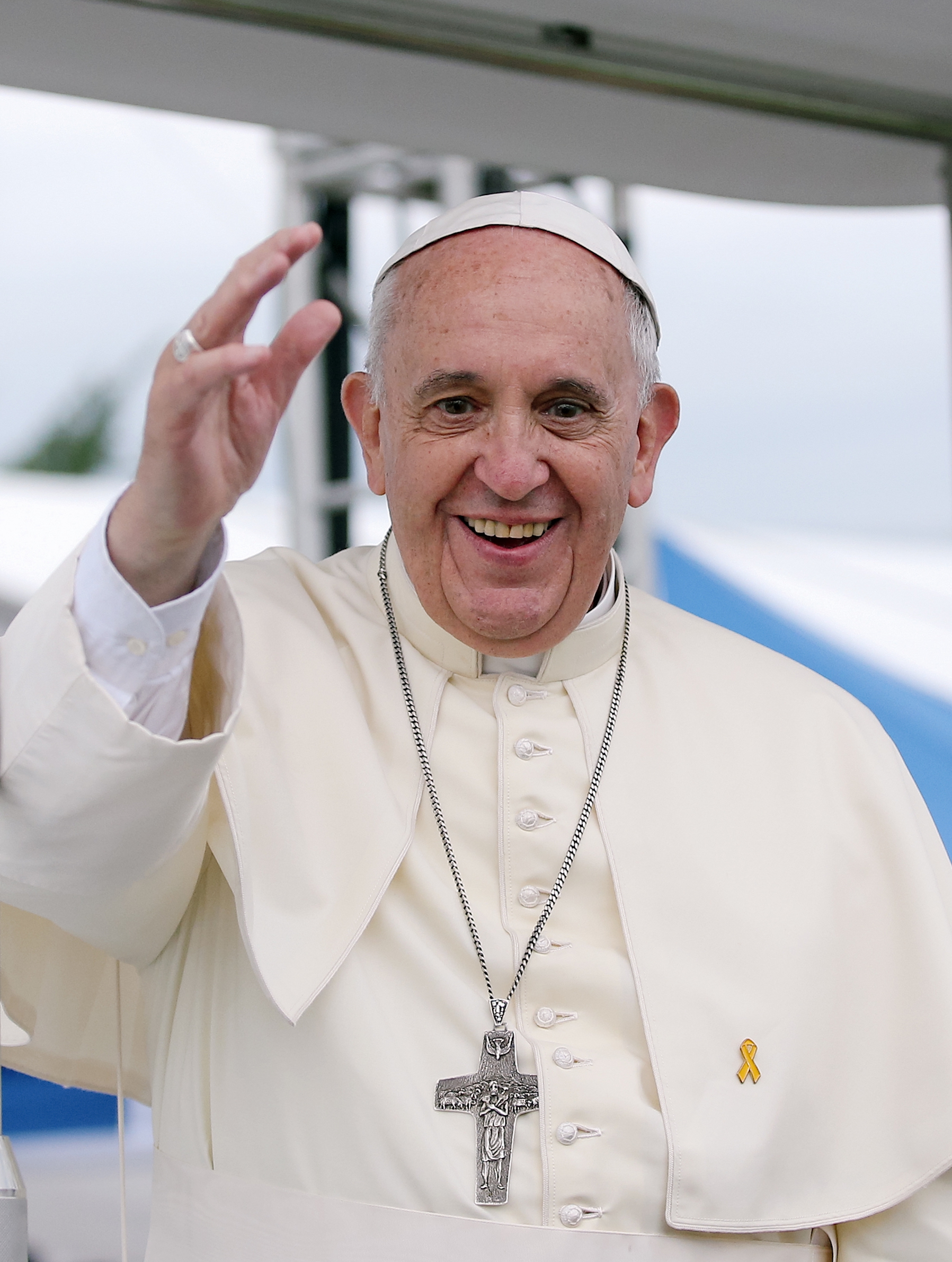
By Addison Burke, Staff Writer
Members of the Xavier community reflected on the life and legacy of Pope Francis, after he passed away Monday morning at the age of 88.
Pope Francis was the first Jesuit pontiff in the more than 2,000-year history of the Catholic Church. He was the first non-European pope in 1,300 years and served for 12 years as the Church’s 266th pope, starting in March 2013.
“For most of his papacy, he (Pope Francis) was consistently ranked among one of the most respected people on the planet,” theology professor Dr. Marcus Mescher said to WLWT News. “He had a lot of status, he had a lot of power, but he always used that in service of people who questioned if they mattered or belonged.”
Born Jorge Mario Bergoglio in Buenos Aires, Argentina, Bergoglio joined the Jesuits in 1958 before being ordained a priest in 1969. He later became the archbishop of Buenos Aires in 1998 and was then made a cardinal by St. Pope John Paul II in 2001.
In 2013, after Pope Benedict XVI resigned, a papal conclave met and elected Bergoglio as the 266th head of the Catholic Church. He chose the name Francis after Saint Francis of Assisi, the founder of the Franciscan Order.

Pope Francis, the first Jesuit pope, passed away yesterday after serving as the head of the Catholic Church for a decade.
Father Eric Sundrup, S.J. noted, in an interview with WCPO-TV that those in the Jesuit order typically do not serve in the formal church hierarchy. Bishops, Archbishops and Cardinals, he said, typically are held by priests from orders such as the Franciscans or Dominicans.
But when called to serve, the vice president for mission and ministry said, Jesuits step up with their special emphasis on justice, compassion and inclusiveness.
“He told us to get outside the walls of the church and go see what the world needs,” Sundrup said. “And, for me, that push has been really powerful and important to me.”
Throughout his life and papacy Francis was known for his humility, emphasis on God’s mercy, international visibility as pope, concern for the poor and his commitment to interreligious dialogue. He had a less formal approach to the papacy compared to his predecessors, which was often criticized by more conservative members of the Catholic Church.
“Along with a bunch of Xavier students, I heard Pope Francis speak a couple times at World Youth Day in Portugal. We stood in the back of a crowd of about a million people, flags from every nation on earth waving,” Jesuit regent Matthew Zurcher said. “In impassioned Spanish, Francis said that afternoon that ‘in the Church there is room for everyone. Todos.’ He made us chant with him, ‘todos todos todos.’ Lots of people say that, but Francis seemed to believe it. I’ll remember it for the rest of my life.”
“Pope Francis had an accessible and pastoral style that has forever changed how many see the papacy. He published four encyclicals in his 12 years as Pope, including Laudato Si’, which guides so much of our work for sustainability here at Xavier,” President Colleen Hanycz said in a statement to the university.
Francis passed away in the early hours of Easter Monday after suffering a stroke followed by heart failure. In recent weeks, Pope Francis had not been making many public appearances due to treatment for chronic lung disease, including a respiratory crisis and double pneumonia that he suffered back in February. Francis made his last public appearance on Easter Sunday, one day prior to his passing.
“He died just like he lived: close to the people of God. Probably ignoring doctors’ orders, he wasted away in plain sight, unashamed by his weakness and mortality. He spent his papacy chastising the world for disposing of elders, migrants, disabled people and our ecosystem in service of the terrible, vain machine of capital and technology,” Zurcher said.
Senior marketing and musical theatre double major Emma Halloran reflected on the passing of Pope Francis just a day after Easter Sunday.
“It is wild to see how humble Pope Francis was throughout his time as pope, constantly directing the faithful toward the Lord rather than himself and brining attention to the poor and marginalized,” Halloran said. “The day after we celebrated Jesus rising and opening the gates of heaven for us, Pope Francis gets to be reunited with Jesus, and while there is time to mourn, that fact should be celebrated.”