Opinions and Editorials Section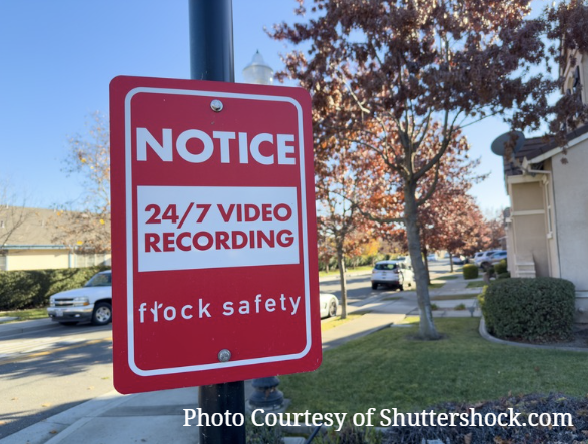
By Andrew Kramer, Newswire Intern
Flock Safety cameras are surveillance systems primarily funded by the government that automatically capture traffic movements using a license plate reader to proactively bring safety to communities. That is, at least, what they were marketed as.
Police authorities have denied using Flock cameras to charge citizens with minor traffic violations, focusing solely on larger crimes like car theft and hit-and-runs, but the motion-captured recordings of these cameras certainly make people easily liable for both major and minor crimes.
The government has been using cameras to watch citizens long before Flock created their cameras, from police body cameras to regular cameras near traffic lights. The difference is that the new cameras are fully automated as they review the footage.
Before now, any investigation into criminal activity took a conscious effort to perform, requiring a warrant. These new cameras use AI to search for vehicle plates or attributes like make and model in search of criminal activity.
This increases the importance of recorded footage in fighting criminal activity because these cameras can flag parts of videos and find the same suspicious vehicles moving across an area using Flock’s interconnected network.
The way that Flock cameras can record and remember certain vehicles brings to question the Fourth Amendment’s protection against unreasonable searches.
Constant surveillance largely removes the traditional boundaries to police surveillance protected in the Constitution, as no warrants are required to review Flock’s footage.
In the district court case “Schmidt v. City of Norfolk” (2026), Flock cameras were decided to be legal because they only captured what could be openly seen from a public street or road.
Flock cameras just seem to be a high-tech version of a police officer writing down car details and license plate numbers, and there is nothing illegal about that.

Intern Andrew Kramer argues that Flock cameras should be viewed with healthy distrust as society begins to manage the consequences of their introduction
However, the cameras are not only used for this purpose. Data misuse cases have sprung up around Flock cameras, with reports of officials using these cameras to track innocent people with no probable cause to justify this action.
Until now, the police needed probable cause to search for illegal activity on surveillance systems, but Flock cameras remove that necessity and review all footage at once.
As more cameras are added, it will become easier to track a specific person’s movements.
It is now possible to track a person before a crime is either committed or even suspected without the probable cause protected by the Fourth Amendment by reviewing the footage collected by over 100,000 interconnected Flock cameras.
In addition to law enforcement, Flock also sells cameras to private communities and businesses.
Organizations can only access the data for the cameras they pay for, but there remains a risk of a hacker or hacking community accessing this increasingly insecure network.
Flock cameras claim to help communities by finding lost people and pets. While this is an obvious benefit for the families of the lost, Flock is admitting that its surveillance is constantly occurring.
For every person who is found, countless hours of footage have been recorded, revealing the movements of everyone who walked by the camera. Americans have a right to privacy and should not be recorded without their permission, especially given that Flock cameras are often installed without a vote from the community.
While the true use of these cameras is still being discovered, the best course of action is a healthy distrust. Cincinnati could benefit from taking an approach similar to Missouri Gov. Mike Kehoe, who set safeguards against Flock cameras.
In a statement to the St. Louis Public Radio, Kehoe said his executive order “is intended to protect residents’ constitutional rights and to protect people from misusing the license plate readers, including data obtained by Flock Safety.”
The contents of the order will most notably force security companies to delete recorded data after 30 days from the initial recording, but will create accountability measures for those with access to the cameras and forbid combining the automated license plate readers with facial recognition technology.
While this order only affects Missouri, it is a good start in preventing unjust surveillance of everyone in the United States by instituting a sense of responsibility.
Flock cameras may seem like a great way to deter crime and catch those who commit large crimes, but they are not worth the risk of putting innocent citizens in the crossfire between legal and unreasonable searches.