Opinions and Editorials Section
By Katy Korstange, Sports Editor
From Friday night high school games to Sunday NFL games, football is a huge part of American culture. As new research continues to expose the long-term consequences of repeated head injuries, the question is no longer whether football carries risks, but whether fans are willing to acknowledge how dangerous these risks can be.
At the beginning of the 2026-27 NFL season, a study was published in the British Medical Journal (BMJ) suggesting that 1in 4 NFL players who died between 2016 and 2021 had Chronic Traumatic Encephalopathy (CTE).
CTE is a neurodegenerative disease that is common in people who experience repeated head injuries. Symptoms of the disease include depression, anxiety, behavioral changes, suicidal tendencies, memory loss, progressive dementia and decreased motor functionality. It must be diagnosed via autopsy of the brain, making an actionable diagnosis impossible and research difficult.
If the one in four statistic is true for the current population of NFL players, this would mean that 12 players on each team will end up with severe CTE.
American culture is heavily centered around sports, especially youth, collegiate and professional football. From a very young age, kids are put into football programs, and many of them continue to play until high school. Some even continue on to college and to the professional level. This means that by the time that they start in the NFL, they have likely already had many concussions, injuries which can be commonly unreported.
Furthermore, the players who stop playing in high school or college have also experienced many concussions while playing. On average, high school football players experience roughly 11.2 concussions per 10,000 athlete-exposures.
College players face roughly 6.3 concussions per 10,000 athlete-exposures, referring to competitions which contestants might have a chance of injury.
Once players get to the NFL, the concussion rate goes down. Last season, ESPN reported that 182 concussions occurred, which is less than the amount reported in 2023. This could be due to the increased safety precautions in the NFL as a result of new research on concussions and CTE.

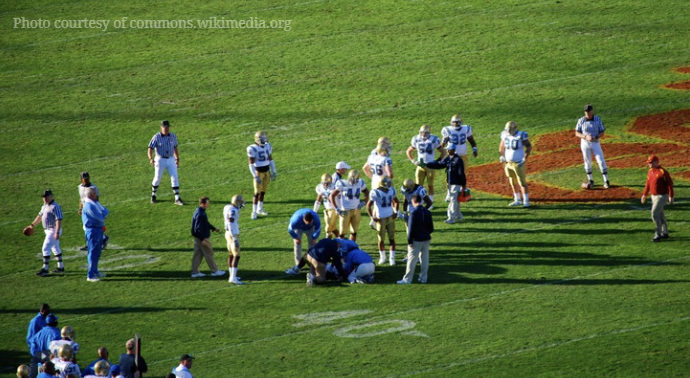
Sports editor Katy Korstange demonstrates why it is that Americans should be concerned about CTE in sports
It is important to consider that CTE is a culmination of hits over the player’s lifetime.
Increased safety precautions in the NFL are good, but they do not account for the over 15 years of concussions players have had experienced before being drafted to the NFL.
CTE is primarily affected by small hits that can often go unnoticed, especially once there is already a baseline of concussions.
According to ESPN, an average regular-season NFL game attracts approximately 18 million viewers per game across television and digital platforms. The culmination of the NFL season is, of course, the Super Bowl which draws in over 120 million people every year.
Most fans celebrate the hard hits in football and attribute it to being an entertaining part of the game, while overlooking the potential long-term consequences of those impacts.
These traumatic are not limited to professional players, with how early children start playing recreational football, exposure to repeated head injuries happens well before the professional level.
The dangers of football extend beyond the NFL and concern a player’s health at every level. Society has become far too comfortable with accepting these risks of the sport as just “part of the game.”
Football is unlikely to disappear from American culture anytime soon. The NFL will continue to fill stadiums, attract millions of viewers and produce the moments that keep fans coming back every season.
But loving a sport should not mean ignoring the consequences it can have on the people who play it. Players dedicate many years of their lives to entertaining fans, yet many are left facing health consequences long after their careers end.
As a result of this new study and the increasing research and awareness about CTE, the prevalence of the disease raises concerns about how much more evidence it will take for fans to reevaluate their love for the game. If 1in 4 former NFL players having CTE is not a strong enough statistic to spark concern, it is difficult to know what will.