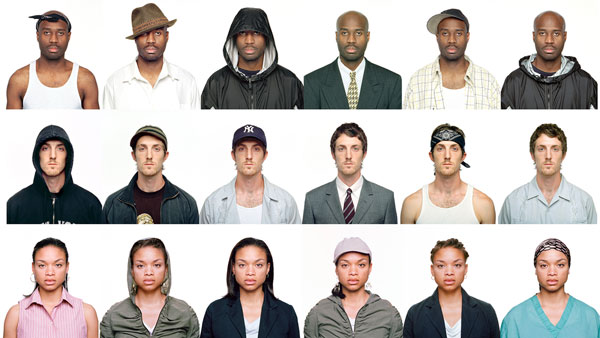
Photo courtesy of questionbridge.com | An E/RS talk last week focused on the relationship among one’s unconsciously held beliefs, stereotypes and assumptions affecting behavior. The talk was lead by Dr. Michael Brownstein. The talk also discussed implicit biases that people can hold and how to combat and eradicate these biases.
The E/RS talk “The Habitat Stance: Cultivating Ethical Implicit Attitudes” last Wednesday was headed by Dr. Michael Brownstein, assistant Professor of Philosophy at CUNY/John Jay College of Criminal Justice. Brownstein’s research focuses on the relationship among one’s unconsciously held beliefs, stereotypes and assumptions and one’s behavior.
Brownstein began the talk on this leg: He showed that although we often pride ourselves on being tolerant, we often unknowingly fall back on unjustified assumptions and hasty generalizations that make people into caricatures. To illustrate this, he talked about our natural ability to distinguish fake smiles from real ones. Our spontaneous reaction is usually the correct one: We can tell forced from genuine happiness. This is one example of a “virtue” of spontaneity.
However, he then followed this with an arrangement of pictures featuring older, White men clad with beards and balding heads, then, with one of women, minorities and other people with hair still on their head. Who were philosophers, and who weren’t? Our immediate reaction are the first. But the reality was that all were philosophers.
Although there are virtues in spontaneous associations (for an example, a talented musician improvising for a solo), there are just as many vices: A person succumbing to alcoholism impulsively giving way to temptations, “professing your love to someone when stoned” and “giving slightly better grades to male students rather than female ones.”
“Nike ethics,” as he called it, is best encapsulated by Walter Payton’s answer to how he is able to play so well: “I just did it.” Brownstein maintained this is a bad way to go about ethical behavior. He explained that implicit biases negatively affect not only police officers in their disproportionate targeting of Black Americans but all of us in various subtle ways.
To demonstrate this, he measured how the audience associates “flower words” and “insect words” with good and bad words. The audience would pat their left leg for words like daffodil and benevolent and their right leg for terms such as mosquito and aggressiveness. We are biased to associate flowers with goodness and insects with badness. Easy, right? Not so much when we mix it up: Tap your left leg for the words rose and horror, and tap your left upon hearing stinkbug and happiness, and you’ll find it’s a lot harder.
The mix-up showed how we are privy to preconceived assumptions, even if we are not aware of them. How you think unconsciously effects how you act in subtle ways. Things like eye contact, tendency to interrupt, how open you are, are all “microbiases.” But the situation isn’t hopeless. Brownstein believes this can be combatted through a “habitat stance,” by making concrete goals and sticking to them. For those too stubborn to change their biases, he urged them to see their self-interests as faltered when bias comes into play—perhaps you don’t make as much money by generalizing X or Y people.
First-year student Libby Overfield felt that the talk was helpful.
“The fact they talked about how everyone has (implicit biases) made it easier to confront my own and feel like it’s something I can talk openly about and work to change,” Overfield said. “Definitely being aware of them can help me strip them from my judgement and come to conversation and activities with people without succumbing to prejudices.”
Other students, like Teresa Simmons, were more skeptical: “Frankly, this was common sense. You really can’t change our biases,” Simmons said. “People from Texas are the worst. I can’t change that opinion.”
By: Grayson Walker ~Guest Writer~


 Campus News